

Somebody in leadership says “we’re moving the team” and suddenly HR, finance, facilities and IT all have a new side project. Most of the stress lands on one question: what exactly are we giving people to make this move happen? That’s the corporate relocation package, and getting it right decides whether your best engineer shows up in the new office motivated or quietly updates their LinkedIn.
We move offices and employees around the Bay Area every week, so we see the good packages and the painful ones up close. Below is a plain-English guide to how corporate relocation programs work, what employees actually care about, where the money goes, and how to pick the corporate moving companies you hand all of this to.
Corporate Relocation Package vs. Employee Relocation Package
People use these terms interchangeably, but it helps to split them:
- Corporate relocation package is the company-side policy: budgets, tiers, which vendors you use, approval rules, repayment clauses.
- Employee relocation package is what one specific person receives: “we pay for your movers, 30 days of temporary housing and one house-hunting trip.”
A clean policy makes individual offers fast to write. A messy one means every employee relocation package becomes a negotiation, and that’s where timelines slip.
The Three Types of Corporate Relocation Programs
Almost every company we work with uses one of three models, or a mix of them by job level.
| Program type | How it works | Good for | Watch out for |
|---|---|---|---|
| Lump sum | Employee gets a fixed amount and handles everything | Junior hires, renters, short moves | People pick the cheapest mover to keep the difference, and that’s how furniture gets broken |
| Managed / direct-bill | Company books and pays vendors directly | Executives, families, homeowners | Higher admin load unless you have a single point of contact |
| Capped / tiered | Fixed budget per tier with a menu of benefits | Mid-size companies moving a whole team | Caps set without real quotes end up too low for Bay Area prices |
Our honest take: lump sums look efficient on a spreadsheet, but for anything bigger than a studio apartment, direct-billing the move itself is worth it. You control the quality of the corporate moving company, you get one invoice, and nobody has to front $8,000 on a personal credit card.
What Goes Into a Good Employee Relocation Package
1. Packing and moving household goods
This is the biggest line item and the one employees remember. Full-service packing, careful furniture wrapping, delivery on a promised date. When you shortlist corporate relocation moving companies, ask whether the same crew packs, loads and delivers, or whether the job is handed off to a subcontractor halfway through. Hand-offs are where things go missing. If you want to see what full packing looks like, here’s how our professional packing service works.
2. Corporate relocation housing
New city, no lease yet, kids still finishing the school term. Corporate relocation housing (usually a furnished apartment for 30 to 90 days) bridges that gap. It also changes how the move is planned: belongings may go into storage first and get delivered to the permanent home later, so your mover needs to handle a two-stage delivery without charging you as if it were two separate moves.
3. Corporate relocation car shipping
Driving a car 1,500 miles is a lost week of work. Most packages either reimburse an auto transporter or book one directly. Corporate relocation car shipping is typically handled by a licensed auto carrier, not the household goods truck, so the trick is timing: the car should arrive the same week as the furniture, not three weeks later while the employee is paying for rideshares.
4. Travel, house-hunting and family support
A house-hunting trip, one-way flights for the family, and sometimes spousal job-search help or school-finding assistance. These are cheap compared to the move itself and have an outsized effect on whether the relocation sticks.
5. International moves
Corporate relocation services international add visas, customs paperwork, container shipping and destination services. Policies here are usually separate from the domestic program, and the work is split between a relocation management company, an international freight forwarder and local movers on each end. The local part still matters: someone has to pack the house in Palo Alto properly before the container ever leaves port.
The Tax Part Nobody Reads Until April
This catches employees by surprise every year. Federal law used to let employers reimburse qualified moving expenses tax-free. That exclusion was suspended in 2018, and the One Big Beautiful Bill Act signed in July 2025 made the suspension permanent, with exceptions only for the military and certain intelligence community employees (details from The Tax Adviser).
In practice, almost every dollar in an employee relocation package is taxable income. That’s why many corporate relocation programs include a tax gross-up: the company pays extra to cover the tax so the employee isn’t out of pocket. If your package doesn’t gross up, say so clearly in the offer letter. Talk to your payroll or tax advisor for how this applies to your company; we’re movers, not accountants.
Who Actually Does the Work
The industry has a few layers, and the names get confusing:
- Relocation management companies run the whole program for large employers: policy design, expense tracking, vendor coordination. Big firms with hundreds of moves a year usually outsource to one.
- Employee relocation companies and employee relocation service companies is a broader bucket that includes destination services, temporary housing providers and consultants who help with one piece of the process.
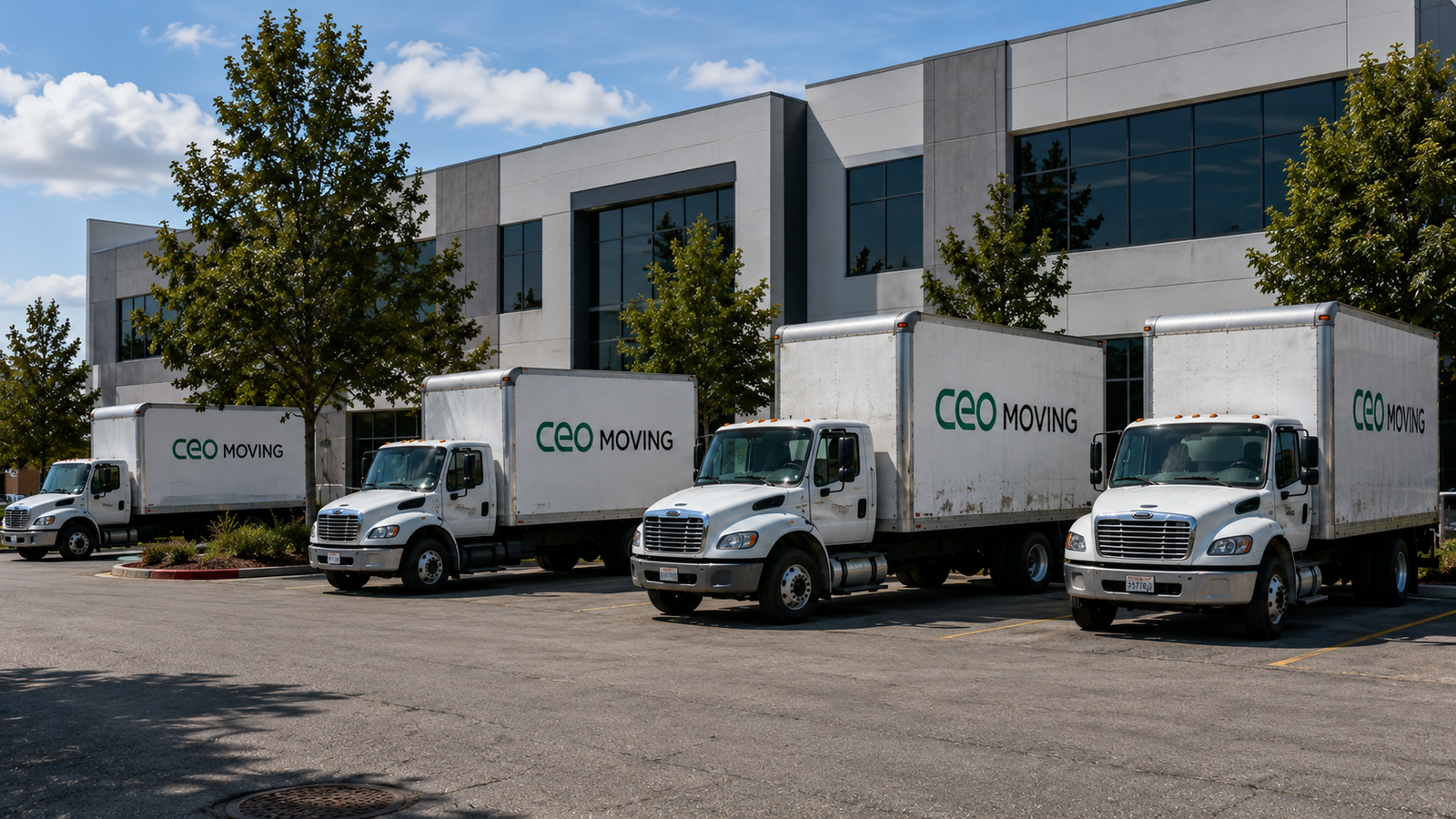
- Corporate moving companies are the people with trucks, crews and packing materials. Every other layer eventually hands the physical work to one of them.
Smaller and mid-size companies often skip the management layer and work directly with a mover that offers corporate employee relocation services: one coordinator, consistent pricing for every employee, and the office move handled by the same team. Fewer middlemen, fewer markups, faster answers. That’s how most of our corporate relocation clients run it.
How to Vet Corporate Relocation Companies
Googling “corporate relocation companies near me” or “corporate movers near me” gives you a page of ads that all look identical. Here’s what separates real operators:
- Licensing you can verify. In California, check the mover’s permit with the Bureau of Household Goods and Services. For interstate moves, check the USDOT number on the FMCSA site. Our guide to moving company red flags walks through it.
- Their own trucks and employees. Corporate relocation companies that broker your job to whoever is free that day can’t promise consistent quality across 20 employee moves.
- A written, itemized estimate after an in-person or video walkthrough. No phone-only prices.
- Insurance certificates on request. Office buildings will ask for a COI naming the building and management company, often with specific limits.
- One coordinator for the whole program, not a call center queue.
- References from other companies, not only homeowners.
Get three quotes. If one of the corporate moving companies comes in 40% below the other two, that’s not a bargain, that’s a warning sign.
Corporate Relocation Services in San Jose and the South Bay
The South Bay has its own quirks, and anyone comparing corporate relocation services San Jose movers offer should plan around them:
- Building rules. Office towers downtown and campuses in North San Jose usually require freight elevator reservations, after-hours move windows and a COI days in advance.
- Tech equipment. Workstations, monitors and server racks need labeling and padded transport, and someone has to coordinate with IT on disconnect and reconnect.
- Housing pressure. Temporary housing near Santa Clara and Mountain View campuses books up fast, so lock in corporate relocation housing before you announce a start date.
- Traffic. A move from San Francisco to San Jose on a weekday afternoon can double the drive time. Good crews schedule around 101 and 280, not on hope.
We’re based in the Bay Area and run moves across San Jose, Santa Clara, Palo Alto and the Peninsula daily, plus long-distance moves when your team is heading out of state.
A Simple Relocation Timeline
| When | Company side | Employee side |
|---|---|---|
| 90+ days out | Finalize policy, budget and tiers; get quotes from movers | Receive and accept the offer and package |
| 60 days out | Book movers, temporary housing, car transport | House-hunting trip; give notice on current lease |
| 30 days out | Confirm dates, building requirements, COIs | In-home or video survey; declutter |
| 1–2 weeks out | Final headcount and schedule | Packing day; utilities and change of address |
| Move week | Office move and IT setup | Load, travel, delivery, unpacking |
Planning a Team Move?
Whether it’s one executive or a whole department, we can price out the moving part of your corporate relocation package so your budget is based on real numbers, not guesses. Get a free quote or call us at (669) 201-3402.