Most people who ask how to pack a moving truck are really asking one question: how do I avoid a truck that’s half-empty with everything left behind, or so disorganized that the couch shows up scratched. The answer isn’t really about strength — it’s about order. Load in the wrong sequence and you’ll run out of room, crush something fragile, or spend twenty extra minutes playing Tetris with a dresser that should’ve gone in an hour ago.
Here’s the loading order our crews actually use, plus the mistakes we see most often when people try to pack a truck for the first time.
Why Load Order Actually Matters
A moving truck isn’t a storage unit you fill randomly — it’s a box that has to survive braking, turns, and highway miles without everything shifting. Heavy items on the bottom and toward the front keep the truck balanced. Soft items and boxes fill gaps and cushion harder pieces. Fragile items go last, both so they’re protected by everything loaded around them and so they’re the first thing off the truck at the other end.
How to Pack a Moving Truck, Step by Step
This is the order that keeps weight distributed correctly and protects what’s inside:
- Disassemble large furniture first — bed frames, table legs, and anything that breaks down reduces wasted space dramatically
- Load major appliances and the heaviest furniture toward the front, near the cab — this keeps weight forward and improves handling on the road
- Stand large flat items on their edges along the walls — mattresses, mirrors, and tabletops take up far less space vertical than flat
- Load medium furniture next — dressers, bookshelves, and couches, using furniture pads between anything that could scratch
- Fill gaps with boxes as you go, not after — heaviest boxes on the bottom, lighter and fragile boxes stacked on top
- Save fragile and frequently-needed items for last, near the truck door, so they load last and unload first
- Secure everything with rope or ratchet straps before closing the door — anything that can shift during transit eventually will
Loading Order Cheat Sheet
If you’re staring at a truck and don’t know where to start, here’s a quick reference for what belongs where.
| Position in Truck | What Goes There | Why |
|---|---|---|
| Front (near cab) | Appliances, dressers, heaviest furniture | Keeps weight forward for stable handling |
| Along the walls | Mattresses, mirrors, tabletops (on edge) | Vertical storage saves major floor space |
| Middle | Medium furniture, heavy boxes | Fills the bulk of the space efficiently |
| Gaps and gaps between furniture | Soft items, pillows, light boxes | Cushions furniture and uses otherwise wasted space |
| Near the door | Fragile boxes, first-day essentials | Loads last, unloads first, handled with the most care |
Packing a U-Haul or Rental Truck vs. a Full-Size Moving Van
U-Haul and Rental Trucks
Rental trucks are usually a bit narrower than professional moving trucks, which makes the “stand things on edge” rule even more important — there’s less forgiveness for wasted horizontal space. The same loading order applies, but expect to do more careful Tetris-style arranging to fit everything in.
Moving Vans
Smaller moving vans work well for studio or 1-bedroom loads, but the loading order matters just as much despite the smaller scale — a poorly balanced van is actually harder to handle on the road than a poorly balanced full-size truck, since there’s less margin for error.
Mistakes That Cause the Most Damage
We see the same handful of mistakes over and over on moves where people packed the truck themselves before calling for help with the rest:
- Skipping furniture pads or blankets between hard surfaces, which causes most of the scratches and dents we see
- Stacking boxes heaviest-on-top, which crushes what’s underneath
- Leaving large gaps that let furniture shift during transit — even small shifts add up over highway miles
- Not securing the load with straps or rope, assuming a full truck won’t move (it will)
- Loading fragile items early “to get them out of the way,” then burying them under everything else
What to Use to Protect Everything
A little bit of the right material prevents most of the damage that happens during a DIY load:
- Furniture blankets or moving pads for anything with a finish worth protecting
- Ratchet straps or rope to secure the load against the truck’s walls
- Stretch wrap to keep drawers shut and pad edges without damaging fabric
- A dolly for anything heavy — appliances and dressers especially
- Mattress bags to keep fabric clean and protected from the truck’s interior
How to Pack a Truck for a Long-Distance Move Differently
Packing a truck for a cross-town single-family moves is a little more forgiving than packing for a long-distance haul, where the truck sits loaded for days instead of hours. For longer trips, tighten every strap more than feels necessary, double up padding on anything fragile, and avoid leaving any gap larger than a few inches — hours of highway vibration will find every weak point in a rushed load.
When It Makes Sense to Skip the DIY Load
Packing your own truck saves money, but there’s a point where truck loading services genuinely pay for themselves — a full house on a tight timeline, heavy furniture you can’t safely lift, or simply not having anyone available to help on moving day. If you’d rather hand off the truck-loading part specifically without booking a full move, that’s a real option worth asking about rather than assuming it’s all-or-nothing.
For a move where you’d rather not touch a single box, full-service moving covers loading, transport, and unloading without any of the guesswork above.
Loading Everything Yourself Isn’t Required
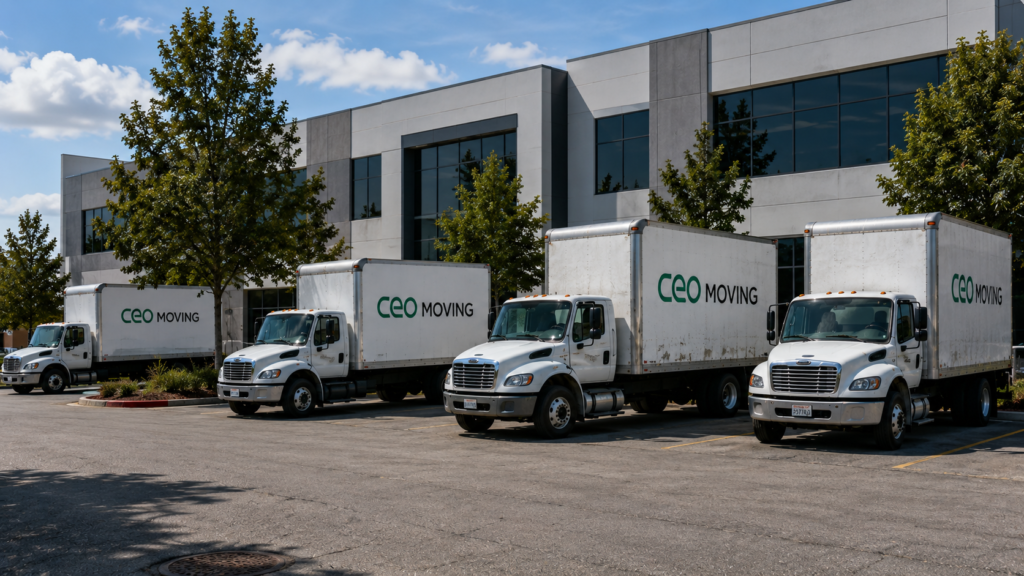
Packing a truck properly takes real time, even once you know the order. CEO Moving has trained crews doing this every day since 2009, with the padding, straps, and experience to load a full home without the trial and error.
Get a free quote if you’d rather leave the loading to people who do it for a living.
Frequently Asked Questions About Packing a Moving Truck
-
What's the best way to pack a moving truck?
Load heaviest items first toward the front, stand large flat items on edge along the walls, fill gaps with boxes as you go, and save fragile items for last near the door. Secure everything with straps before closing up.
-
Do movers load boxes or furniture first?
Furniture generally goes first, since it forms the structural layout of the load — boxes then fill in the gaps around and on top of furniture rather than the other way around.
-
How do I pack a U-Haul truck properly?
The same loading order applies, but rental trucks tend to be narrower, so vertical storage (standing items on edge) matters even more to avoid running out of space.
-
How do I pack a moving truck for a long-distance move?
Pack tighter and more securely than you would for a local move — double up padding on fragile items, avoid gaps larger than a few inches, and check that straps are tight, since the load will experience hours of highway vibration.
-
What should I use to protect furniture in a moving truck?
Furniture blankets or moving pads between any hard surfaces, plus stretch wrap for drawers and edges. A dolly makes handling heavy pieces safer for you and the furniture both.
-
How do I pack furniture in a moving truck without scratching it?
Wrap it in moving blankets before loading, avoid placing anything directly against another hard surface, and load heavier pieces first so lighter furniture isn't stacked in a way that puts pressure on finishes.
-
Should I rent a bigger truck than I think I need?
Generally yes, within reason — a truck that's slightly too big is easier to load efficiently than one that's too small, where you end up leaving items behind or overloading unsafely.
-
How do I pack for movers if I'm not loading the truck myself?
Have everything boxed, labeled by room, and ready to go before the crew arrives. You don't need to load anything, but a packed and organized home saves real time on move day.